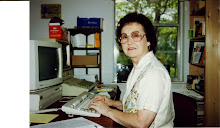
It feels so good to finally be writing again on my inspirational romance novel set in Navarre Beach. For awhile, off and on throughout 2014, I was in the hospital a lot and too ill to write.
I had started working on the manuscript in October 2013. Ken and I went down to Navarre about the middle of October, got a lot of pictures, and Tony and I did a lot of posting about it on facebook. Then by the end of the year I was unable to work on it. But I'm back on it now, and really enjoying it.
My first inspirational romance, THE MISTAKEN HEIRESS, was published April, 2014, and I needed to get the second one done long before now, and then get back to a historical one I have started.
I really hope I can keep my blog going again, too. I want to do more about writing on it, and having some other authors share, too. If you are a writer/author or wantabe and would like to share on it, contact me in comment on the blog or email shelbasn@ gmail.com.
Saturday, June 13, 2015


Monday, January 19, 2015
My previous history posts
.
It’s been so long since I posted , I thought I
should check to see what I’ve written about in the past. I found there’s more
history posts than any others, so I went back through them and put them all in
one list so it would be easier for me to see what I had covered. After it was
done I decided to post the list to make it a little easier for someone who
might want to read about a particular family or subject. The list was too long
for me to give legal land descriptions and exact locations, other more detailed
information, dates, involvement in the Civil War, etc., and general historical
information, which some of the blogs share.
I’ll post this list first, then try to put the
others in some kind of order for readers. Please feel free to leave comments,
questions, additions, corrections or email.
There are posts about:
Jamestown,
Va. and my ancestors—an early governor and his brother, the first pastor of the
Anglican church in America, sent here by the English King in 1621(Posted June,
2007).
A large reunion of a branch of my husband Ken’s
family, with live music, scrapbooks and dinner on the grounds of an old family
home (July, 2007).
Our small, historic church building offered for
sale. Reporters and photographers from two Birmingham T.V. stations interviewing
pastor and me. They also showed my book and told about it (August, 07).
Revitalization and immediate growth of our church
congregation after merging with another small congregation. Brief history of
both (August, 09).
Interviewing, researching and writing about the
Blackerby family in my weekly newspaper column. Recalling the fun of
interviewing and researching for my local history book and as a photojournalist
years earlier before the internet—using old books, letters and photos, boxes of
odds and ends in homes, libraries, and courthouse records in giant record books
and the attic (April 2010).
Some of my ancestors migrating from England in 1621,
and eventually making their way to Shelby County, Alabama (my home county)
where they settled, raised families, died, and are buried. My recollection of
visiting the cemetery as a child, along with the little, rural church across
the road, for funerals and “homecomings,” without knowing I had several generations of family
buried there until I began researching family history (March, 2011).
Tracing my family line from Vikings in Norway
through Normandy, France and across the English Channel to conquer England,
marry royalty from several countries, sail to America, and eventually migrate through
several states to Alabama (March, 2011).
This is an introduction to the next several blogs
about Ken’s Kendrick family line and the settling of our community
K-Springs—which derived its name from the Kendricks (June, 2011).
This blog was taken from my local history book, Early Settlers of the K-Springs/Chelsea Area,
about Elmira Gilbert Kendrick, widow of Isham Kendrick, who died in 1866,
leaving Elmira with at least six minor children and another on the way. It shares
quotes, and descriptions, from my personal interviews with grandchildren of
Elmira who lived in the cabin her son Luther built for his mother (June, 2011).
Descriptions of five springs discovered near
Elmira’s cabin, where people of the community came to wash, bathe the kids, and
carry home bucketsful of water for other household uses. This blog also shared
a photo of four young women doing laundry there. (One became my next door
neighbor after Ken and I moved to K-Springs where he grew up, and one of them
loaned me the picture for the book). During following years and generations,
the springs furnished water for many other families and groups, including
schools and churches (June, 2011).
Description of the early K-Springs school and school
life—studies, lunches, fun and games—by people who went to school there in the
late 1800s and early 1900s. And the story of a young couple who met and fell in
love playing against each other in a ball game between their schools
(June,2011).
Two old photos of K-Springs school groups, with
names (July, 2011).
The love story and 1908 marriage of a bashful, young
man (Frank Kendrick) and the girl (Ressie Vick) he loved (July, 2011). (This
couple gave me a lot of invaluable information).
A guest blog
by my son Tony about his remembrances of his great-grandmother and her faith. Known
as “Aunt Jemima,” to people in the community, former students, and fellow
church members, “Jemima Folsom Kendrick” (to whom my book is dedicated) is
pictured several times in Tony’s blog (Sept 2013).
HISTORY STORIES I'VE SHARED
It’s been so long since I posted , I thought I
should check to see what I’ve written about in the past. I found there’s more history
posts than any others, so I went back through them and put them all in one list
so it would be easier for me to see what I had covered. After it was done I
decided to post the list to make it a little easier for someone who might want
to read about a particular family or subject. The list was too long for me to
give legal land descriptions and exact locations, other more detailed
information, dates, involvement in the Civil War, etc., and general historical
information, which some of the blogs share.
I’ll post this list first, then try to put the
others in some kind of order for readers. Please feel free to leave comments,
questions, additions, corrections or email.
There are posts about:
Jamestown,
Va. and my ancestors—an early governor and his brother, the first pastor of the
Anglican church in America, sent here by the English King in 1621(Posted June,
2007).
A large reunion of a branch of my husband Ken’s
family, with live music, scrapbooks and dinner on the grounds of an old family
home (July, 2007).Our small, historic church building offered for sale. Reporters and photographers from two Birmingham T.V. stations interviewing pastor and me. They also showed my book and told about it (August, 07).
Revitalization and immediate growth of our church
congregation after merging with another small congregation. Brief history of
both (August, 09).
Interviewing, researching and writing about the
Blackerby family in my weekly newspaper column. Recalling the fun of
interviewing and researching for my local history book and as a photojournalist
years earlier before the internet—using old books, letters and photos, boxes of
odds and ends in homes, libraries, and courthouse records in giant record books
and the attic (April 2010).
Some of my ancestors migrating from England in 1621,
and eventually making their way to Shelby County, Alabama (my home county)
where they settled, raised families, died, and are buried. My recollection of
visiting the cemetery as a child, along with the little, rural church across
the road, for funerals and “homecomings,” without knowing I had several generations of family
buried there until I began researching family history (March, 2011).Tracing my family line from Vikings in Norway through Normandy, France and across the English Channel to conquer England, marry royalty from several countries, sail to America, and eventually migrate through several states to Alabama (March, 2011).
This is an introduction to the next several blogs about Ken’s Kendrick family line and the settling of our community K-Springs—which derived its name from the Kendricks (June, 2011).
This blog was taken from my local history book, Early Settlers of the K-Springs/Chelsea Area, about Elmira Gilbert Kendrick, widow of Isham Kendrick, who died in 1866, leaving Elmira with at least six minor children and another on the way. It shares quotes, and descriptions, from my personal interviews with grandchildren of Elmira who lived in the cabin her son Luther built for his mother (June, 2011).
Descriptions of five springs discovered near
Elmira’s cabin, where people of the community came to wash, bathe the kids, and
carry home bucketsful of water for other household uses. This blog also shared
a photo of four young women doing laundry there. (One became my next door
neighbor after Ken and I moved to K-Springs where he grew up, and one of them
loaned me the picture for the book). During following years and generations,
the springs furnished water for many other families and groups, including
schools and churches (June, 2011).
Description of the early K-Springs school and school
life—studies, lunches, fun and games—by people who went to school there in the
late 1800s and early 1900s. And the story of a young couple who met and fell in
love playing against each other in a ball game between their schools
(June,2011).
Two old photos of K-Springs school groups, with names
(July, 2011).The love story and 1908 marriage of a bashful, young man (Frank Kendrick) and the girl (Ressie Vick) he loved (July, 2011). (This couple gave me a lot of invaluable information).
A guest blog by my son Tony about his remembrances of his great-grandmother and her faith. Known as “Aunt Jemima,” to people in the community, former students, and fellow church members, “Jemima Folsom Kendrick” (to whom my book is dedicated) is pictured several times in Tony’s blog (Sept 2013).
Monday, December 16, 2013
TOO UNBELIEVABLE TO SHARE ONLINE?
This blog is taken from email between a fellow-writer and myself, my answers only, because the email group is a private group.
She shared some interesting stories she has read or heard about some of her ancestors, and places she would like to visit to see where they lived and to research further. One of the places on both our lists of places to visit is Scotland. I don't expect to ever visit Scotland, but maybe she will. She is younger and hopefully more mobile.
Although Scotland, Ireland and France are on my list, I especially would like to go
England. The book I've referenced in a past blog is a cousin's book which traces our ancestors back to England where some of
them were born in castles that I later learned are still standing, and to the tower of London where
one "grandpa" died.
The cousin's book didn't say why this ancestor died in the Tower of London. After thinking about it for
a few years along with urging from Ken (my husband) I got on the computer and googled the ancestor's
name to see if I might find him mentioned someplace. I had thought of
checking history books before starting to research on the computer, but was
busy with other projects. But after I began researching family on the internet, I thought If he is mentioned in history books, he should also be on the internet. And, lo and behold! WHEN HIS NAME POPPED UP THERE WERE
ALL SORTS OF INFO AND SITES ON HIM, HIS FATHER AND GRANDPARENTS and further back.
I later learned the ancestor who died in the Tower of Lond was executed for leading a rebellion to de-throne Bloody Mary and put Jane Grey on the throne..
I kept following names and other vague leads until I traced us
through kings and queens and knights to the Vikings in Norway (WHERE MY d-IN-LAW
ONA'S FATHER WAS BORN), and to LOTS of other countries. So my family chart on
that line has been printed up on sheets I've taped together this way and that on
taped together sheets of poster board and had copied for other family members.
I also have a hard-back notebook about a foot thick with copies
of various family lines and things I've copied from the internet and history books.
Also have several historical novels about some of them and others are still
being published, along with movies.
I've not put it all online because it seems too unbelievable to be true,
but it's fun with the family anyway, and I have references for the material,
which suits us. It's like a treasure hunt or putting together giant and
complicated puzzles. It can get hold of you like an
illness that won't turn lose and take you away from other important writing
projects.
According to email from my fellow writer/researcher, it sounds like she may use some of her research and family stories for books. Don't know about mine, though. I am already too deep into more recent
history for a possible series of inspirational, historical novels--which, hopefully, my agent Linda and I can find a publisher for. Right now, I am still working on a possible contemporary, second inspirational romance for Harlequin/Heartsong Inspirational romances and waiting to hear from our Heartsong editor on it.
Like my email fellow researcher/writer, you may be involved with sorting drawers and boxes of records left by a deceased "pack-rat" parent or other relative. If so, happy
hunting and writing to you and to her. And happy sorting. Enjoy the memories you are stirring up and the new info you are uncovering about your loved one -- the way Kate--the heroine in my soon-to-be-released Heartsong Inspirational THE MISTAKEN HEIRESS, did.
My 3 sisters and I are still
going through mother's "stuff" after her death almost 10 years ago. But it's hard to
get 4 sisters together to go through old pictures with one living out of state and two more spending months at a time at their second-homes out of our home-base area.
Two
of our four brothers are gone now. One is just now becoming interested in family history, and the other is interested only in more recent family (but helps the rest of us keep up with them). Lots of grandchildren enjoy it, though. So maybe when I and my other five living siblings are gone, our descendants will use my records and continue with family research.
Perhaps some of them will also visit places where some of our distant royal kin was born, lived, reigned and died. Several of them already visit the countries on occasion, and have quite likely visited some of their castles without realizing they have family ties to the places. Or that blood was shed there with DNA which matches ours today.
.
Shelba
O
Monday, November 11, 2013
HELP! I'M LOST ON BLOGGER- and "Downtown" ain't what it used to be.
Every time I come into blogger or google+ I am lost. Of course, it does not take much to get me lost. I have no sense of direction--on the computer, driving or walking.
When I worked in downtown Birmingham during the 1950s, I would go out shopping or eating out someplace at lunchtime and quite often in order to find the way back to my office, I would walk a block to street marker then a block to an avenue marker to see which way I needed to walk, north, south, east or west to get back to my office in the Birmingham News Building. My entrance was through a revolving door of the main lobby at 2200, 4th Avenue North.
It's not that easy on the computer. I don't know which way to go right now to re-post my Published Works that I deleted a few days ago. I copied them from google+, but now can't find how to paste them where they belong.
And while I was on google+ I "violated" some rules I started trying to fix and knocked myself off someway. AND I need to be proof-reading my final proof for THE MISTAKEN HEIRESS, due back to my editor at Heartsong next week.
Can anyone tell me how to get back to my "office" on Blogger--which used to seem easier as DASHBOARD--where I can paste my PUBLISHED WORKS again? And I will see if I can fix what I violated on google+.
THANKS SO MUCH TOO ANY KIND SOUL WHO CAN AND WILL HELP ME OUT.
Shelba Shelton Nivens
When I worked in downtown Birmingham during the 1950s, I would go out shopping or eating out someplace at lunchtime and quite often in order to find the way back to my office, I would walk a block to street marker then a block to an avenue marker to see which way I needed to walk, north, south, east or west to get back to my office in the Birmingham News Building. My entrance was through a revolving door of the main lobby at 2200, 4th Avenue North.
It's not that easy on the computer. I don't know which way to go right now to re-post my Published Works that I deleted a few days ago. I copied them from google+, but now can't find how to paste them where they belong.
And while I was on google+ I "violated" some rules I started trying to fix and knocked myself off someway. AND I need to be proof-reading my final proof for THE MISTAKEN HEIRESS, due back to my editor at Heartsong next week.
Can anyone tell me how to get back to my "office" on Blogger--which used to seem easier as DASHBOARD--where I can paste my PUBLISHED WORKS again? And I will see if I can fix what I violated on google+.
THANKS SO MUCH TOO ANY KIND SOUL WHO CAN AND WILL HELP ME OUT.
Shelba Shelton Nivens
Thursday, October 10, 2013
JOURNEY TO PUBLICATION


It’s
good to have Author G. H. Sherrer, share with us today. I found her “journey to
publication,” extremely interesting, and I think you will, too, even if you do
not write novels yourself.
I
recently met with G. H. (Gladys) Sherrer for coffee at our local Christian coffee
house. Gladys and I knew each other slightly
when we both worked as columnists for the same newspaper, so I was excited to
hear about the publication of her latest novel, The Breakthrough, Volume II
in her The Keeper Chronicles.
I
read Volume I, “The Mall Street Sleuth,” and
did an interview with her for my community column in the Shelby County Reporter. So I was glad to have this opportunity to
interview her as a guest on my blog.
Since
Gladys (G. H. Sherrer) can tell you so much better than I can about her writing
and publishing process, I’m posting the interview here, instead of writing
another article. Shelba: Gladys, you have told me about having a love for books and words since you were a young child. But when and what did you first write for publication?
Gladys: As an early teen, I made a small submission
to Grit newspaper, for which I was
paid a pittance. But that taught me I needed to apply my talents elsewhere. Thus,
a healthcare career caught and held my attention.
Shelba: So, did you
work in healthcare before starting a writing career? What did you do?Gladys: Yes, I’m a former registered nurse who became a technical writer and then a columnist/journalist.
Shelba: What prompted
you to begin writing novels?
Gladys: I’m appalled at some of the fiction found on
book shelves today, and thought a change was needed. In my work I met exciting
people like Pulitzer Prize winning authors and playwrights who inspired me. I
always read widely, noting an author’s style and craft, and during the writing
of The Mall Street Sleuth I reread M.
Montgomery’s Anne of Green Gables,
Nancy Drew mysteries, Tom Sawyer and
many other classics I loved as a child, plus a few of today’s novels like Bud, Not Buddy by Christopher Paul
Curtis, Carl Hiaasen’s Hoot, Higher Power of Lucky by Susan Patron
and Rebecca Stead’s When You Reach Me.
I
had won a few awards myself, and in 2009 I won First Chapter Novel Award from
Alabama writers Conclave for The Mall
Street Sleuth, my first novel, which inspired me to keep going. Of course,
words had intrigued me from the beginning, and being a middle-child in a family
of nine, I have a need to be heard, I suppose.
I was always an avid reader and studied a dictionary for fun in grammar
school, won spelling bees and word games.
Also, I’ve always been
detective-like in observation of people, nature and the world.
Shelba: How did your own life experiences help mold
your first novel?
Gladys: Everything I saw or read was “Grist for the
mill,” as they say. In the Keeper Chronicles,
Starr, the protagonist, is an abandoned child whose adventurous ways are
inspired by my sister, who enticed me to follow her into woods before I could
toddle. By age eight I was her cohort in
disobeying our working parents—in things like jumping aboard a wooden pallet
floating on a lake. There’s a bit of
myself in every character, especially Miz Alma who becomes Starr’s mentor,
although choosing to make her a person of color came from an old, black farmer from
my childhood. Matthew worked in a kitchen
garden for a nursing home across the road.
While he plowed, he sang hymns. At the end of the day he placed a basket
of fresh produce outside our door, never allowing payment, of course.
Shelba: What was your primary inspiration for writing
The Mall Street Sleuth?
Gladys: My healthcare career inspired me, as did my
Christian faith and belief that an ounce of prevention is worth more than a
pound of cure. When I left a career in 2006, needing a change of scenery, I
chose living in a condo in Phoenix, Arizona for a winter. While there, I joined
a writer’s inspiration group, and using a prompt supplied by the leader, I
wrote a short story about the character now known as Starr. When hearing that I
was finally to become a grandmother, I came home to Birmingham where I joined a
writing workshop taught by novelist Anne Nall Stallworth. Anne suggested there was a great deal more to
the story than I’d written so far—a novel, so she said.
Shelba: How did you go about turning the short story
into the novel?
Gladys: Using my analytical traits, I began with a
story outline, and made up a character list including birthdates, physical
attributes, personalities, quirks. I decided on general plot (coming-of-age
family drama) and premise (We are “our brother’s keeper”). I chose a setting,
the Carolina seacoast, researched its flora, fauna and weather patterns. I’ve
had more rewrites than I could count, all which were based on writer critiques,
feedback, and my own perfectionism, striving to improve craft. I chose to make this a Book Club Edition with
questions in the back of the book leading into discussion.
Shelba: Tell us about the publishing process.
Gladys: For one whole year, 2010, I stopped all
columnist work, knuckled down to writing query letters to agents and publishers.
While awaiting their feedback, I continued rewriting and editing and learning
the publishing business. At the end of a
year, I had amassed a collection of rejections, and though they told me I am “a
good writer;” they believed the story had “market appeal” and “merit;” they think
my writing is “lovely, pleasant, has definite lyrical cadence,” the message was
clear. Novels selling today are mostly based on witches and warlocks, Dracula,
fantasy. Did I want to write to sell, or
write to fulfill my personal goal? After around sixty rejections from agents
and publishers, I sought self-publishing avenues, and found Infinity Publishing
in West Conshohocken, Pennsylvania. Six weeks later I had a fresh paperback
novel in my hand.
Shelba: And now you, as author G. H. Sherrer, have a
second novel, The Breakthrough, The
Keeper Chronicles, Volume II, which you have published under one cover with
a newly-edited The Mall Street Sleuth. Where can The Keeper Chronicles be purchased?
Gladys: My books are available in several places, in
paperback or eBook. Infinity Publishing has an online book store at www.BuyBooksOnTheWeb.com, where you
can also find a toll free phone number. Amazon.com sells my books, and they can
be ordered by request at any bookstore.
I saw on the web where a bookstore in the United Kingdom is selling The Keeper Chronicles and was happily
surprised to see that Ventura Library system (California) has picked up The Mall Street Sleuth.
Shelba: What now? What
is your next step in your writing career?
Gladys: I have an historical novel in progress, an
antebellum South Civil War era, and am hoping for completion within a year. The
working title is Love In the Crossfire.
Shelba: That sounds interesting, and I’m sure we’ll
be hearing more about it in coming months. Be sure to keep us posted on
facebook about your progress with the new book and on what’s happening with the
first two. In the meantime, I want to
thank you for being a guest on my blog today.
Gladys,
author G.H. Sherrer, a member of Alabama Writers Forum, is an experienced
public speaker and is available for writing workshops, conferences and book
clubs. She was recently contacted about speaking to a Highland Lake book club,
the date to be announced. She can be contacted at ghsherrer@gmail.com. “Like” her on
facebook at Gladys H. Sherrer, Author. Read more about her and her writing--and her interview with me on my upcoming book--on
her blog, http://journeytopublishing.blogspot.com.
Wednesday, September 18, 2013
REMEMBERING MAWMAW
MAWMAW JEMIMA KENDRICK
A guest blog by Tony Nivens
Big Maw maw, as I called her, was known to most of the K-Springs/Chelsea, Alabama community as Aunt Jemima. She was an inspiration of faith and Christian Character to many in this area. School teacher, church worker, community benefactor, mom, grandmother and my great-grandmother, her heritage and stories are alive to many today. Thanks Mom, for the chance to share one story special to me.


Guest Blogger Tony Nivens with his Big Maw MawMom probably experienced Jemima Kendrick's influence as deeply as anyone not one of the Kendrick kids/grandkids. Shelba's husband, Ken Nivens, was raised by Jemima, his grandmother, in a time when many other influences in his life were absent because of war, work and family issues. Shelba as a young mother often sought her wisdom and experience. Shelba shared many of Jemima's recollections of the pioneers of the area in her first book. Indeed, Shelba dedicated the book to her memory.From dedication page from Early Settlers of the K-Springs/Chelsea Area:
Maw maw was already white-haired and "ancient" to me as a kid but I remember her sweet loving spirit and earnest prayers. She always prayed that I would be a good boy. I'm sure my cousins were uncertain of that answer. She modeled the loving sharing spirit to me from a young age as I followed her in the flower garden carrying a basket for her to gather the bounty to share. She loved to minister to others and always shared her gorgeous flower arrangements with the church and neighbors.


a cameo of Jemima in her 20s and her husband Elra
She had lost her husband when just a young mother and had to learn to farm to provide for them. She also got a teaching certificate and became a school marm. She and the kids would live near the school during school term and move back to K-Springs in the summer to farm. I remember her working her large (to me) vegetable garden when she must have been over 80. I got to "help" her and Uncle Floyd pick 5 gallon buckets of beans. Then we sat on the porch and snapped them. She was always canning/freezing and again sharing with others.

Jemima and children Myrtle, Floyd, Elra and Verna with grandson Ken
As a matter of fact the first time I ever realized she wasn't indestructible was when she fell on the steps as she carried a jar of preserves to the basement. We all teased her that she took better care of the jar than herself. She seemed proud that she held onto the jar so it didn't break though she was bruised from the fall. She just smiled and shook her head good naturedly as we teased.
Hope I get a chance to share more with you. You gotta' hear about the rain miracle and almost running Pop down with the car.... Well, I'm not sure if the stories I remember about her past are from her or the retelling by Pop or from Mom's book but she definitely left me with a lasting impression.
Subscribe to:
Posts (Atom)